
 Stories
Force for Good 2026: How Eight Group Front-Loaded Leadership Alignment
Eight Group is a U.K.-based facilities management business built to scale through acquisition and operational excellence. Alpine Operation Group’s Talent...



This article was originally published on Graham Weaver’s blog.
By Graham Weaver, Founder and CEO, Alpine Investors
“If I have seen further than others, it is because I have stood on the shoulders of Giants.” – Sir Isaac Newton
Reading voraciously is one of the greatest life hacks I’ve ever adopted– and I’ve adopted a lot of life hacks. Reading offers you the ability to absorb years — often decades — of knowledge from those who are the very best in the world at what they do, all in just a few hours.
For example, in his international bestseller, Good to Great, Jim Collins and his research team sifted through tens of thousands of documents to determine, with specificity, how companies successfully transitioned from mediocre to outstanding performance. Luckily for us, we can invest little more than 10 hours and $13.65 to learn the same lessons they spent five years uncovering. I’d call that a wildly asymmetric return on time and dollars.
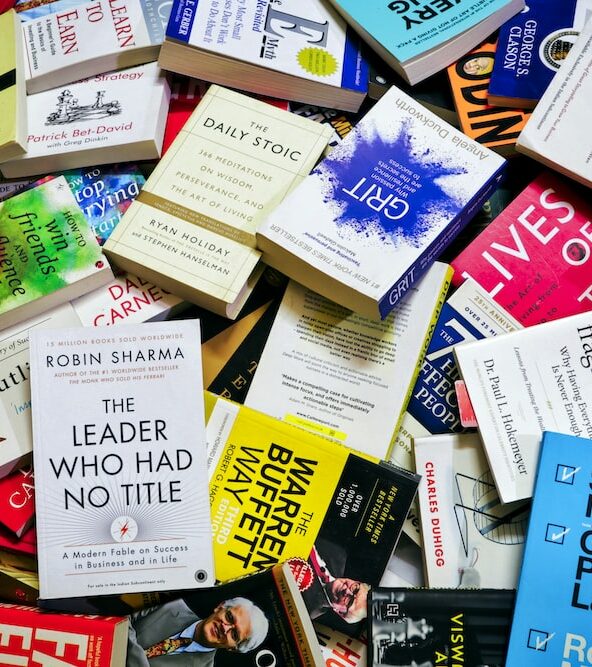
Over our 22 years of operating Alpine, we have collectively consumed thousands of hours of content related to business building, leadership, and investing. Below are insights from the five books that made the most significant impact on us.
After experiencing learning curves in Alpine’s first fund, I read this book looking for answers — solutions that would help our firm transition from “good” (a generous term for our performance at the time) to “great.”
Like most people, I expected that great companies won with innovative strategies or new technology. But Collins and his research team discovered that “great” leaders’ first move is to “get the right people on the bus, the wrong people off the bus, and the right people in the right seats.” Only then can they figure out where the bus is going. I didn’t realize it then, but the simple concept of getting the people right would become a silver bullet for me as a leader — and the secret to building Alpine and our portfolio companies.
Our primary focus became attracting and retaining the world’s best people. We even coined the term “PeopleFirst,” which expresses both the chronology of hiring the right people first and the priority of focusing on those people above all other priorities.
Our approach works because, with the right people on the bus, we have the collective horsepower to create a winning vision. And because our team helped create the vision, they are much more enrolled in executing it. I believe hiring and retaining the best people is a leader’s primary job and the key to consistent winning.
Great leaders’ first move is to get the right people on the bus, the wrong people off the bus, and the right people in the right seats.
Once we agreed that getting the right people on the bus was our priority, Geoff Smart taught us precisely how to do it. Building off his father Brad Smart’s book, Topgrading, Smart outlines a clear process for making hiring more scientific in his bestselling book, Who. The method includes the following steps:
We hired the consulting firm Green Peak to train Alpine in the Topgrading framework, which was one of the best investments we’ve ever made! Today, we offer Topgrading training sessions to all Alpine portfolio company managers twice yearly. The book and process have transformed the way we hire.
There are hundreds of business strategy books, but by far, the best strategic statement I’ve ever encountered comes from Dan and Chip Heath in their bestselling book Switch. These eight words flipped a mental switch for me: “Find what’s working and do more of that.”
These eight words flipped a mental switch for me: ‘Find what’s working and do more of that.’
While most executives run around putting out fires and fixing what’s broken, Dan and Chip Heath argue this is the exact opposite of the behavior leaders should practice. Instead, they should be scaling their bright spots — doing more of what is working. The absolute simplicity of this statement belies its power. Consider a few straightforward applications of scaling bright spots:
We used this strategy to scale our CEO-in-Training (CIT) program, our investment in software and services, our focus on add-on acquisitions, our undergraduate recruiting program, our win-the-deal process, and many more core strategic initiatives at Alpine. It works. Do more of it.
Countless investing experts dole out advice daily, but is there any question about who is the greatest investor of all time? Warren Buffett’s track record is staggering. Ten thousand dollars invested in Berkshire Hathaway in 1965, when Warren Buffett started buying the stock, would be worth $252 million today. This is an astounding 20% annual return over 58 years! Buffett has never written an investment book per se, but he has penned an annual letter to Berkshire Hathaway shareholders since 1959. In the letters, Buffett spells out his investment strategy and philosophy. Here are a few that have resonated with our team:
If you hear investors saying, “This time is different” (the four most dangerous words in investing — see internet stocks, cryptocurrencies, SaaS company valuations) — that is a great time to re-read Buffett’s letters. As unsexy as they might seem, Buffett’s timeless principles can serve as a North Star in any investment period. Adhering to them doesn’t require enormous intelligence, but it does require patience, discipline, and an even temperament.
Arguably the least well-known book on this list, Competition Demystified was written as a sequel to the famous Michael Porter book, Competitive Advantage. In Competition Demystified, Greenwald argues that while Porter discusses five forces that impact the competitive advantage of a business, only one of these forces really matters: barriers to entry. I wrote a longer blog on barriers to entry here. Greenwald argues that there are only a few sources of true barriers to entry over the long run.
Early in Alpine’s history, we invested in many fast-growing companies that lacked barriers to entry, only to watch competition enter the markets and compete away the companies’ margins. The simple structure of Greenwald’s arguments formed the backbone for our assessment of companies over the subsequent decades. This advice, combined with “Find what’s working and do more of that,” led to our focus on software and services and then allowed us to be even clearer about which companies within those categories merited our investment.
One of my mentors used to say, “If you read for 30 minutes in the morning, you have already won the day.” I’ve consumed thousands of hours of content from books, podcasts, videos, and speeches, and I’ve learned more valuable lessons from this habit than any other activity. If you’re not already in this habit, I hope the books and insights above spark a new interest — or reignite an old one — in investing your time in reading. I’d love to hear your book recommendations.
If you’re considering a sale, our team can walk you through what to expect and how to get started. Book a 15-minute call to learn more about what a transition could look like for you and your business.
Book a call with our team today to get started StoriesEight Group is a U.K.-based facilities management business built to scale through acquisition and operational excellence. Alpine Operation Group’s Talent...
 News & Updates
Backed by Alpine Investors through its $4.5 billion Fund IX, Eight Group brings together leading local engineering businesses through a differentiated, decentralised…
 News & Updates
Alpine Investors is pleased to announce it has been named one of GrowthCap’s Top Private Equity Firms of 2026 for the fourth…

No strings attached. Unsubscribe anytime. For further details, review our Privacy Policy and Terms of Service.